
Close-up magician,
Kansas City.
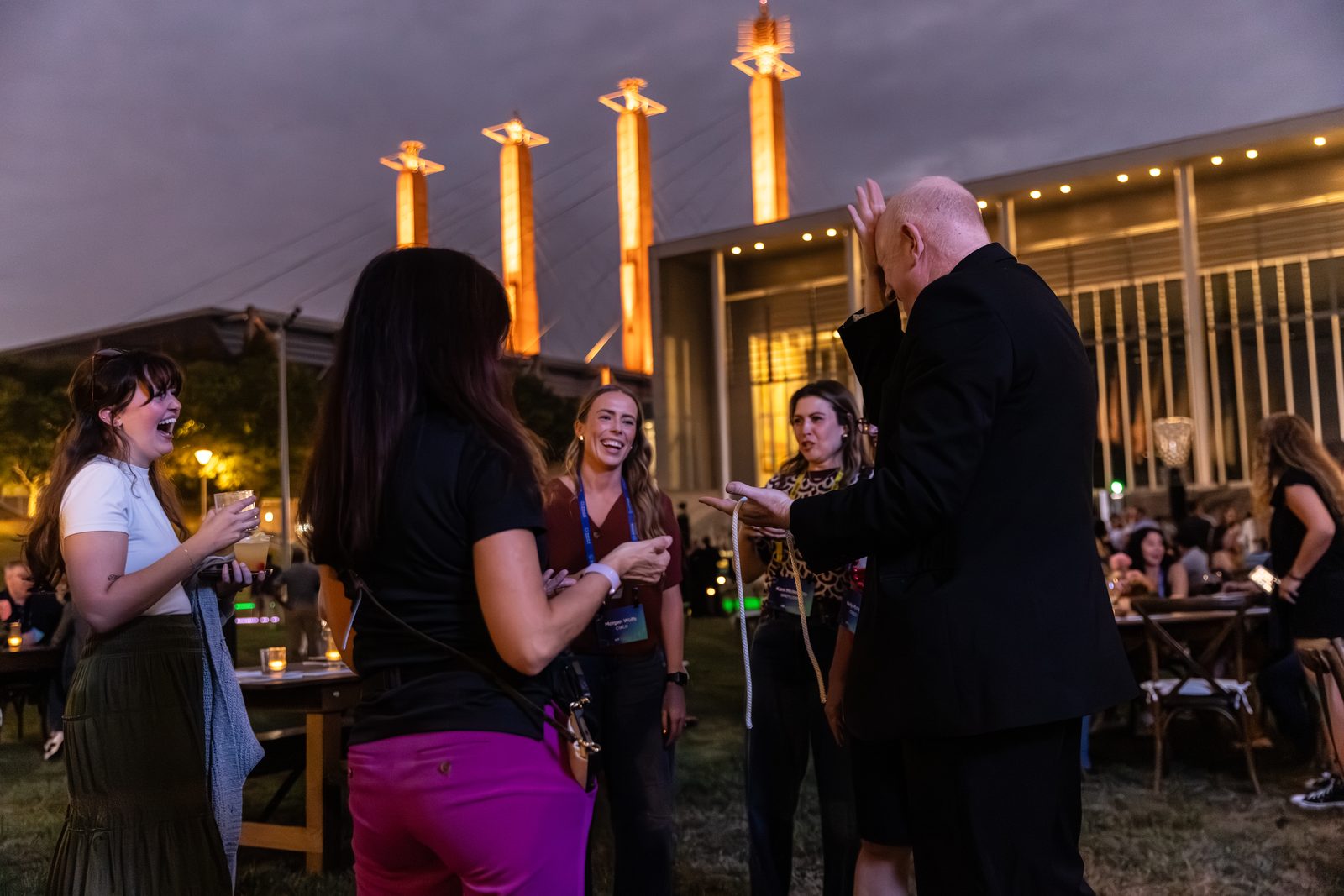
Sleight-of-hand performed inches from your guests at cocktail hours, hospitality suites, wedding receptions, and corporate mingling events. Scott moves through the room, stops at groups of three to five, and turns strangers into people who'll be talking about a card trick on Monday.
Trusted by leading organizations
Magic you can
reach out and touch.
Close-up magic works because of proximity. From a stage, the audience watches from thirty feet away. At a cocktail-hour table, the card trick is happening on a guest's own hand. The reaction is different. They look at their friends, ask to see it again, try to figure it out, and bring it up at the office on Monday.
Scott has performed close-up and strolling magic for the Kansas City Chiefs, Hallmark, Pfizer, John Deere, LinkedIn, the Federal Reserve Bank, and hundreds of private clients. At corporate cocktail hours, hospitality suites, wedding receptions, and intimate dinners, it is the rare format that connects strangers. Guests who hadn't spoken all night end up laughing together at the same card trick.
The format scales: one hour, two hours, or a full evening of strolling magic. Scott typically covers 40 to 80 guests per hour in close-up rotation.
Three ways
to run it.
-
I.
45–90 min
Cocktail Hour Strolling
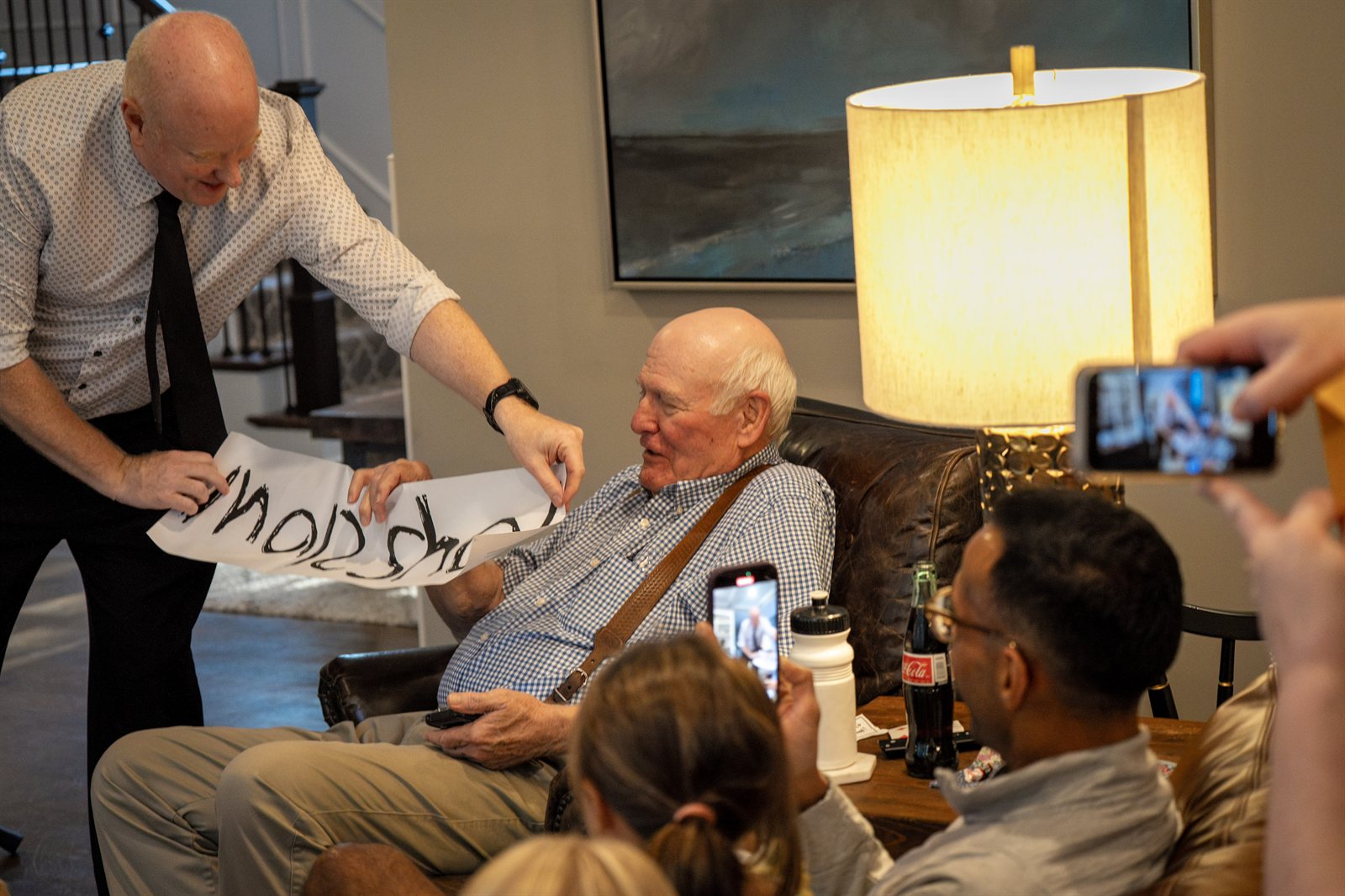
Scott moves through the room during your cocktail hour, table to table, group to group. Ideal for opening the room, breaking the ice among strangers, and setting a high bar for the evening. Works at company happy hours, wedding receptions, and gala pre-dinners.
-
II.
1–3 hrs
Trade Show Hospitality Suite
For private trade show hospitality events and VIP client dinners, close-up magic creates a talking point and an instant icebreaker. Scott engages guests in small-group rotations while your team handles the business.
-
III.
Full event
The Full Evening
Cocktail hour strolling plus a short after-dinner feature. The combination is powerful: guests have already experienced Scott up close, then see him astound the whole room from the stage.
What gets
customized.
Every engagement begins with a conversation. You tell Scott about the evening: the audience, the tenor, the outcome you're trying to land. What reference material the room will find funny. Whether there's a retiring executive whose thirty-year tenure deserves a callback. A product launch you want written into the closing illusion. A sales number the CFO wants celebrated.
Those details get worked into the show before the night ever comes. The work happens before Scott arrives, not on stage.
What the venue needs to provide. Very little. A defined performance area and an outlet within fifty feet of the stage. Scott brings his own props, his own lighting where needed, and a full professional wireless microphone and PA system. A venue mic is optional, never required. His PA is also available for the client's use during the evening, for music, announcements, or another speaker. He arrives early, works the room before the show, and leaves you free to focus on the hundred other things a corporate event has running.
Audience range. Twenty people in a boardroom, a thousand in a hotel ballroom, or any number in between. For very large rooms, confidence monitors or a house camera feed are standard, and most venues that size already run them.
Scoped to
the evening.
Every close-up engagement is custom-quoted. Runtime, number of guests, travel, and any upgrade to a full-evening format all shape the proposal. Travel, lodging, and per-diem are itemized separately for out-of-market bookings.
Personal reply within twenty-four hours of inquiry, followed by a proposal. Holds are released in the order received.
Scoped individually. Final figures depend on format, audience, travel, and custom content.
Scott also performs for adult private parties and milestone birthdays and children's birthdays. Different formats, same standard.
The usual
asks.
What's the difference between close-up and strolling magic?
Essentially the same thing, different names. 'Close-up' emphasizes the proximity: magic happening inches from the audience's eyes, often on their own hands or with their own belongings. 'Strolling' emphasizes the movement: Scott moves through the room rather than staying in one place. In practice, Scott does both at once.
How many guests can Scott cover in an hour?
Typically 40–80 guests per hour in close-up rotation. Scott stops at groups of three to five, performs two to three routines, then moves on. For larger rooms or longer events, Scott can scale his pace accordingly or bring in additional performers.
Does this work for cocktail hours at weddings?
Yes. Cocktail hours are one of the most common formats. Close-up magic during cocktail hour turns the "standing around waiting for dinner" window into entertainment, and the guest experience ripples through the rest of the night.
What does the venue need to provide?
Nothing. Close-up magic requires no stage, no microphone, no A/V. Scott arrives with everything he needs in a briefcase. A professional wireless mic and PA system are available if any part of the evening transitions to stage format.
Can close-up be combined with a stage show?
Yes, and it's a popular combination. Strolling magic during cocktail hour, followed by a stage show after dinner. Guests have already met Scott one-on-one, which makes the stage show feel personal rather than distant.
How far in advance should we book?
Cocktail-hour engagements typically book 2–4 months out; the October–December window fills fastest. Short-notice requests are always worth asking about. Cancellations happen, and Scott occasionally keeps time open.